


Schoolboy 男生徒
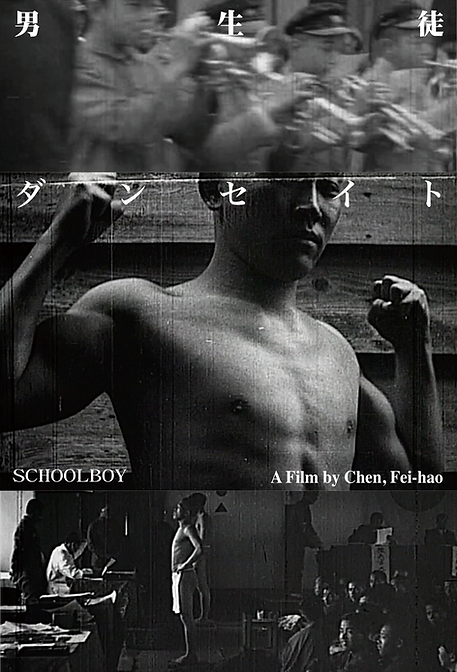


單頻道錄像 42min, 六頻道錄像裝置 6:00, 文件.. 2025.
在「男生徒」的創作計畫中,藝術家陳飛豪就三個日治台灣與朝鮮的三個日文文本,包括由台灣醫學人寫出的醫學文章〈同性戀是一種疾病〉,台朝兩地第一篇以現代文學形式書寫而成的同志小說〈同性愛〉以及韓國現代文學之父李光洙的〈是愛?〉,重新改寫翻譯成三個嶄新連結台日韓三地的時代文本,即台語的〈Paris〉、日語的〈タクミ〉(拓海、Takumi)與韓語的〈憂世〉。從原本的日文原文,重新轉換設定成較貼近三地本土語言情境的「檔案電影」錄像創作,並且以錄像裝置的形式重現這三個文本的轉譯過程,解讀台韓現代文學中隱喻的殖民現代性議題,透過「翻譯」的過程,達到另一個解殖後匯聚新文化想像的可能性。
single channel video 42min, Six-channel video installation: 6:00, documents.. 2025.
Both Taiwan and Korea experienced modernization of social systems and conceptual reconstruction under the colonial rule of the Empire of Japan. Homosexuality, defined as a mental disease by medical associations, was spontaneously marginalized and regarded as heresy with the promotion of the new educational mechanism. Taking this as a lead-in, CHEN Fei-Hao read over publications, articles, and novels, in which he found three texts for further investigation and invocation, including the medical piece.
"Homosexuality is a Disease, How Should We Prevent It?" from the magazine Taiwan Fujinkai, the novella "Homosexual Love" from Taiwan Police Times, and the novel "Is It Love written by the father of modern Korean literature, YI Kwang-Su, with the theme of homosexual relationships between male students.
Based on the homosexual experiences of the predecessor artist in the Japanese rule era. the artist rewrites the original texts in Japanese into novellas in Taiwanese, Japanese, and Korean, including "Paris," Takumi," and"A Land of Sorrow," while reinterpreting and recreating the political propaganda videos and national policy films in the Japanese rule era of Taiwan and Korea. In the work, the artist aims to intervene in the historical colonial issue between Taiwan, Korea, and Japan in the times of the Empire of Japan through reflection on the subject of homosexuality.


